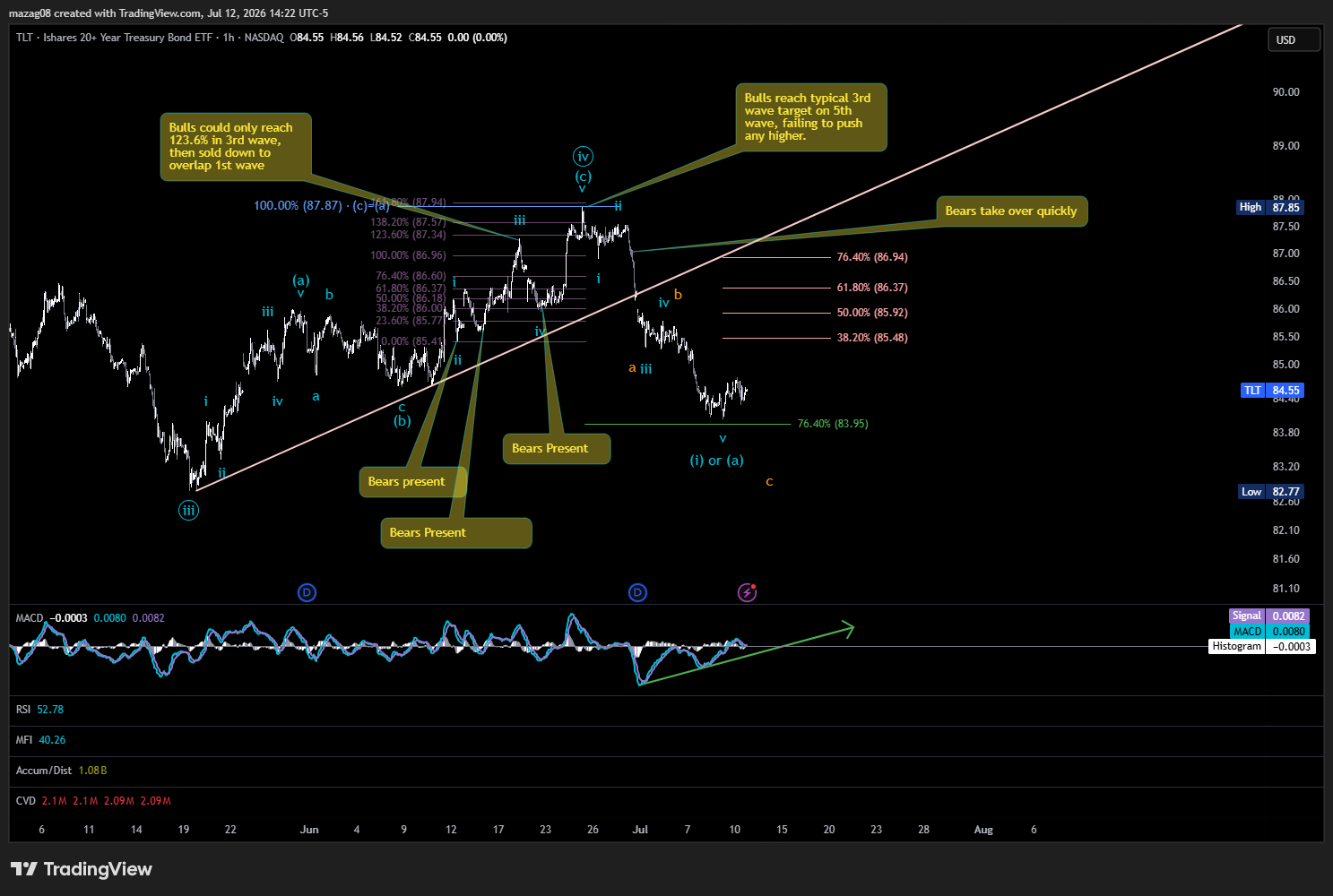
Understanding Diagonals (Especially Ending Diagonals)
 By
Mark Z
By
Mark Z
I posted this in response to a question on Avi's SPX weekend update, but thought it was worth a Beginner's post to help understand diagonals, especially ending diagonals.
Before we go further, did you know that there are both video and text outlines in our education section detailing every type of wave? There is no better intro to learning Elliott Wave than our education section. Elliott Wave Education: Glossary - ElliottWaveTrader
Leading Diagonals:
Standard - Leading Diagonal - ElliottWaveTrader
Expanding - Expanding LD - ElliottWaveTrader
Text Outline - https://www.elliottwavetrader.net/trading-room/post/964949
Ending Diagonals:
Standard - Ending Diagonal - ElliottWaveTrader
Expanding - Exanding ED - ElliottWaveTrader
Text Outline - https://www.elliottwavetrader.net/trading-room/post/941622
Diagonals are 5-wave moves comprised of corrective structures, typically 3-wave ABC moves. Since every move outside of the C waves is corrective, this means that they are ALWAYS prone to failure.
Also remember, diagonals are either "starting" a move (leading diagonal most commonly found as Wave 1 or wave A) or "ending" a move (ending diagonals commonly found in 5th waves and C waves).
Since we are looking for a high of some degree off the SPX March low, a diagonal to the upside would be an ending diagonal. And no, it doesn't have to reliably complete. Diagonals often come up short of ideal targets (161.8% - 176.4% the size of their first wave from the bottom of their second wave).
Again, because every move is corrective, you are seeing the kind of mix of bullish and bearish sentiment that often happens during corrections, not impulsive expansions. Ending diagonals are the bulls ultimately winning the day each step of the way, but there's enough bears keeping at least a temporary lid on price at all times that the move never quite reaches the heights the bullish sentiment wanted or expected. And this is why ending diagonal reversals are so swift and punishing. Once the bullish sentiment exhausts, the bears are ALREADY present. You don't need a bearish build-up phase like you would following a completion of an impulse. The bears are there. They've been there during each wave. And once the bulls are out of juice, the bears get all of what they want quickly.
Check out TLT over the past couple of weeks if you want to see what that looks like in real time.