
SPCX: The Supply Will Come — The Question Is When
 By
Levi
By
Levi
Let me lay out what we actually know now, because the picture has filled in considerably.
SpaceX priced at $135 on June 11 and opened to the public the next day. It sits near $185 as I write this — up better than a third from the offer in a handful of sessions. The headline market cap reads $2.44 trillion. Hold that number loosely, because it is not what it appears to be.
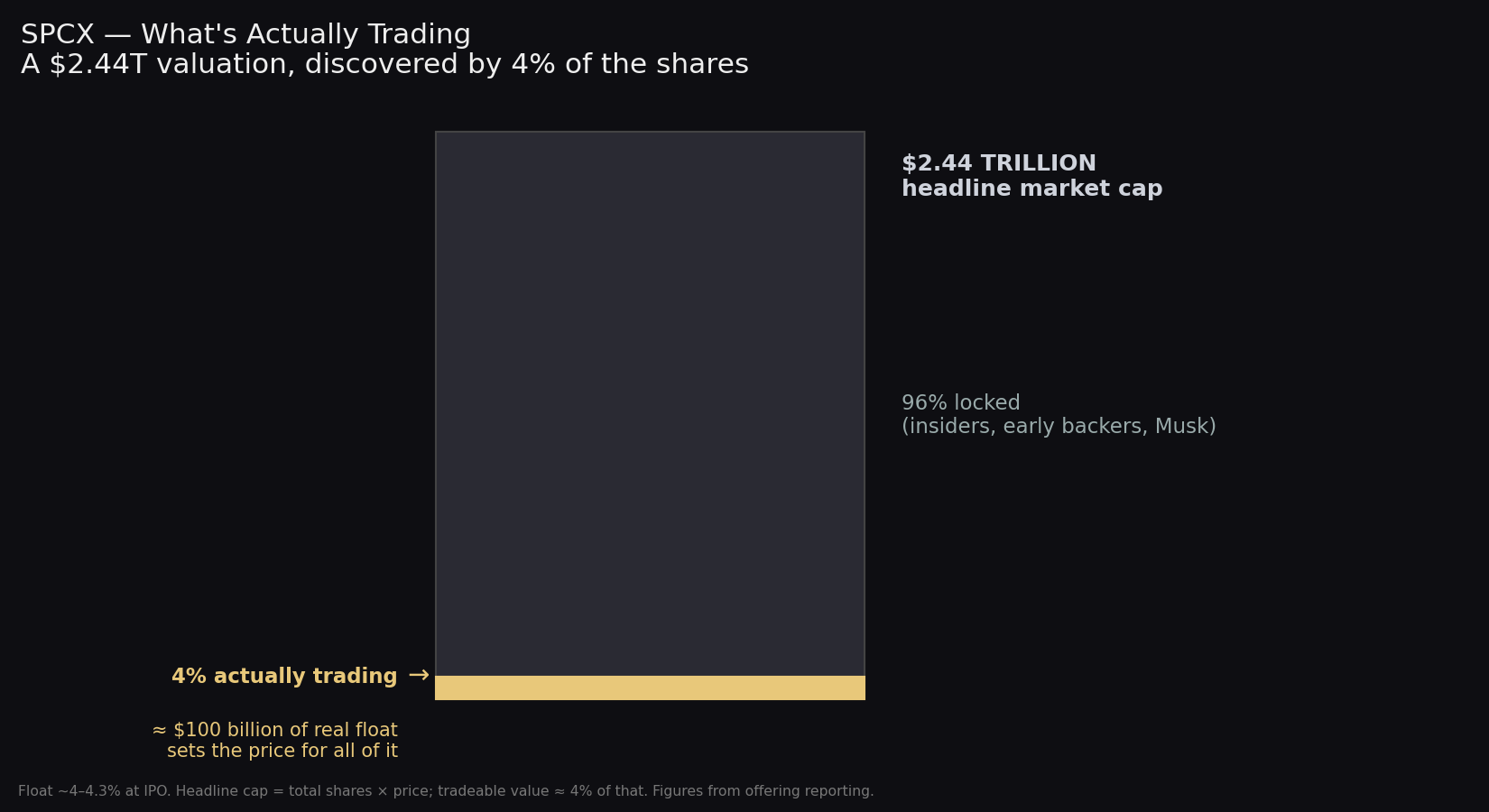
Here is why. Only about 4% of the shares are actually trading. The other 96% are locked. So that $2.44 trillion is a price discovered by a sliver of the company, then multiplied across the whole. Roughly a hundred billion dollars of real float is setting the value of the entire enterprise. That is not a criticism. It is just what a thin float does — it makes price loud and makes valuation a kind of echo.
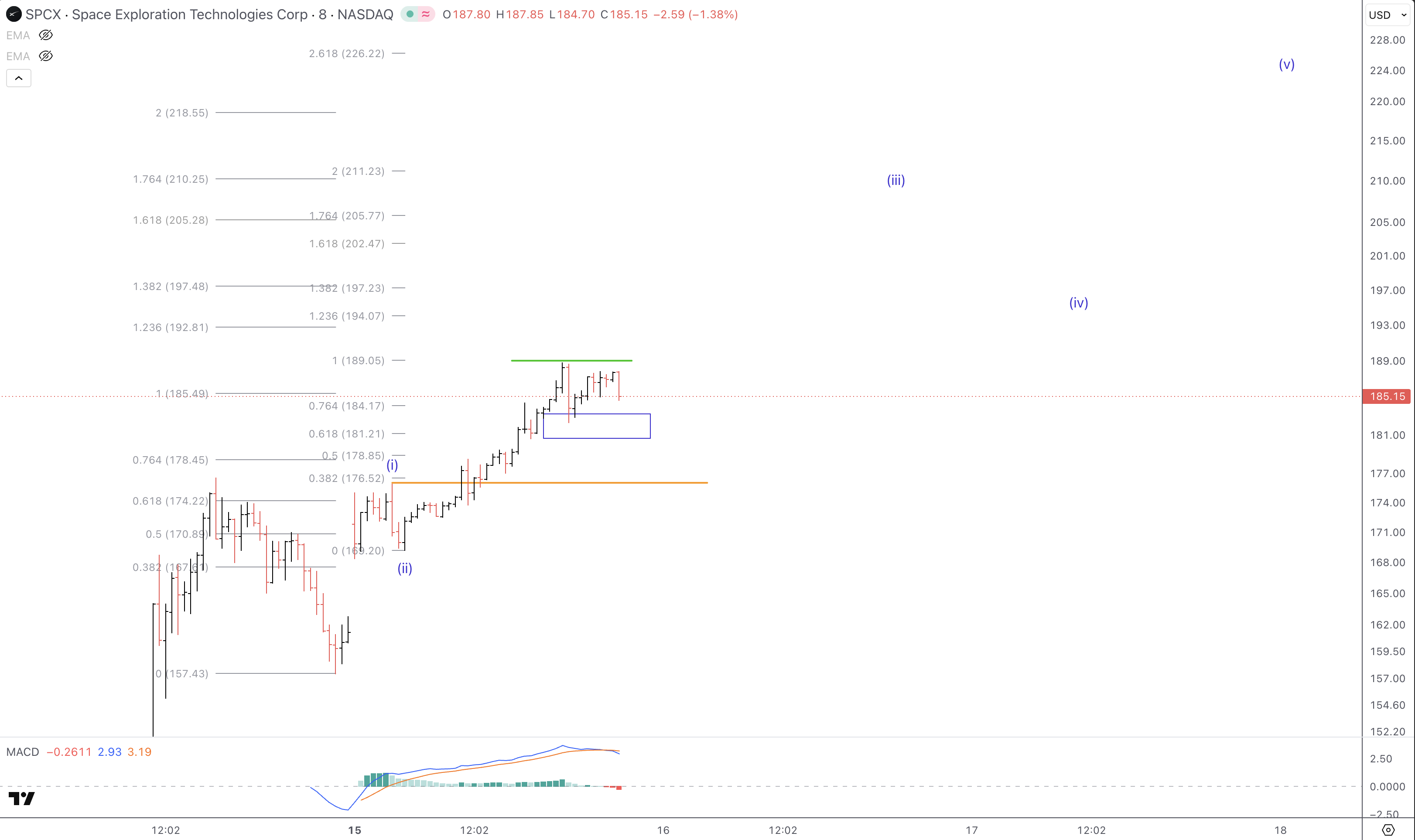
Now layer in the calendar, because this is where it gets interesting.
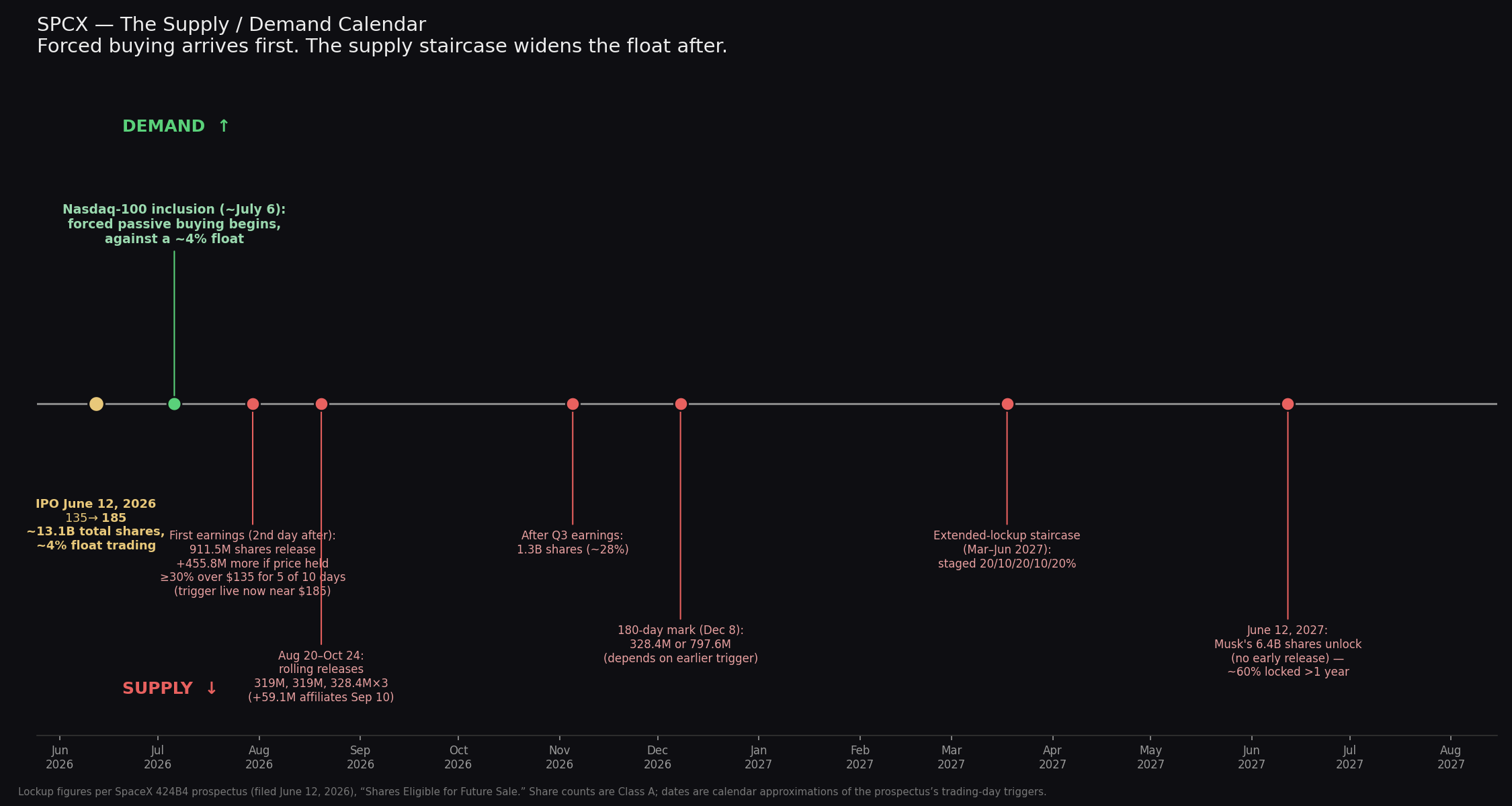
On the demand side, the index doors are opening unevenly. Nasdaq changed its rules and SpaceX likely enters the Nasdaq-100 around July 6 — which forces the passive funds to buy, mechanically, into that same thin float. The S&P 500, to its credit, refused to bend. No profits, no entry, at least for a year. So you get a wave of forced buying from one direction while the largest index sits it out.
On the supply side, the locks do not break all at once. SpaceX built a staircase instead of a cliff. The first real opening comes after Q2 earnings — sometime mid-July into September — when a large block of shares releases. And note this: an extra slug unlocks early if the stock holds 30% above the IPO price. Thirty percent above $135 is about $175. We are already past it. So the very strength lifting this thing is arming the release.
After that, smaller tranches step out across the late summer and fall. More after Q3. The full release lands around December 8. Musk and the big backers? Locked for a full year, into June 2027. That last part matters more than the rest combined.
So here is the tension, plainly. Forced demand arrives first, in early July, against a float too thin to satisfy it. Then supply begins to widen — slowly, then less slowly — right into whatever price that demand created.
That sequence is the whole story. Demand before supply tilts the early going. The harder question is what happens when the float starts opening and the buyers have already bought.
I do not know the answer yet. Neither does anyone selling you one. What I know is the schedule, and the schedule says the easy part comes first.
Watch the float, not the headline. The cap is an echo. I will be watching the calendar as a possible signal against key price levels.
